
From VPN to Zero Trust
A Strategic Analysis of Network Access Technologies for Enterprise Decision-Makers
Prepared by JODOR Technologies Research Team — Riyadh, Saudi Arabia
Zero Trust Network Access (ZTNA) connects an authorised person to a specific application after evaluating identity, device context and policy. It does not assume that joining a corporate network makes every connection trustworthy. This summary explains the practical decisions behind a move from VPN access to application-level access, before you request the full whitepaper.
What is ZTNA?
ZTNA is an access-control approach, not a promise that an organisation can eliminate trust or prevent every attack. A policy decision determines who may use an application, from which device and under which conditions. Enforcement points then limit that connection to the permitted resource. Identity verification, device posture and useful logging remain essential dependencies.
A complete Zero Trust programme is wider than remote access. It also considers privileged accounts, workload communication, data protection and incident response. ZTNA can be one component of that programme, provided the architecture reflects how people actually work and how applications handle authentication.
Why VPN access can fall short
A VPN encrypts traffic and can remain appropriate for some administrative or legacy use cases. The difficulty is often the access model around it: broad network reachability, shared exceptions, weak device checks or permissions that outlive a supplier engagement. Compromised credentials can become more damaging when one connection exposes unrelated systems.
Replacing a VPN without correcting those practices simply moves the problem. Review application ownership, access groups, authentication strength and session visibility first. Identify systems that cannot support modern access controls and document compensating measures rather than assuming one new gateway will secure every dependency.
A practical migration sequence
- Discover applications, users, suppliers and data flows. Record owners, authentication methods, network dependencies and business-critical access paths.
- Define policy with business owners. Decide which identities, device conditions and approval processes justify each application connection, including emergency access.
- Pilot a low-risk application with representative users. Test enrolment, authentication, performance, support procedures and rollback before expanding.
- Integrate identity, device management and security monitoring. Confirm that denied connections, policy changes and suspicious sessions produce actionable evidence.
- Migrate in controlled groups, then remove redundant VPN permissions. Review exceptions, validate legacy dependencies and repeat access reviews as roles and applications change.
Key takeaways for decision-makers
Measure the quality of access decisions, not just the number of migrated users. Useful evidence includes application-level permissions, timely removal of supplier access, tested recovery paths and logs that investigators can interpret. Agree ownership across security, IT operations, application teams and the service desk before rollout.
The whitepaper supports architecture and procurement discussions; it does not replace an assessment of your environment or establish regulatory compliance. Start with a bounded scope, explain the expected operational change and compare approaches against your actual applications. Download the paper below for the broader discussion.
Frequently asked questions
Does ZTNA replace every VPN?
Not necessarily. Legacy protocols, administrative workflows or recovery arrangements may still need controlled VPN access. Decide per application, test dependencies and retain documented exceptions with accountable owners and review dates.
Is multi-factor authentication enough?
MFA strengthens authentication, but does not by itself restrict application permissions, validate device health or monitor session behaviour. Combine it with least-privilege policy, lifecycle management and appropriate detection.
Can suppliers use ZTNA?
Yes, where the chosen architecture supports their identities and devices. Limit access to named applications, define expiry and approval rules, and verify that offboarding removes access promptly.
How long does migration take?
There is no universal timetable. Application discovery, identity readiness, legacy dependencies and pilot results determine the schedule. A phased roadmap is more credible than promising a fixed duration before assessment.
Does ZTNA prove compliance?
No. Technology can support access-control requirements, but compliance depends on applicability, governance, implementation and evidence. Map the design to relevant obligations and validate the controls in your environment.
Overview
This whitepaper presents a comprehensive, methodology-driven analysis of why traditional VPN architecture is fundamentally inadequate for modern cybersecurity requirements, and makes the strategic case for Zero Trust Network Access (ZTNA) as the superior architectural approach.
Key Topics Covered
- ●Traditional VPN architecture problems and security vulnerabilities
- ●Zero Trust principles and ZTNA architecture models
- ●Competitive positioning analysis and technology maturity assessment
- ●NCA ECC, NIST and CISA alignment
- ●Migration roadmap from VPN to ZTNA
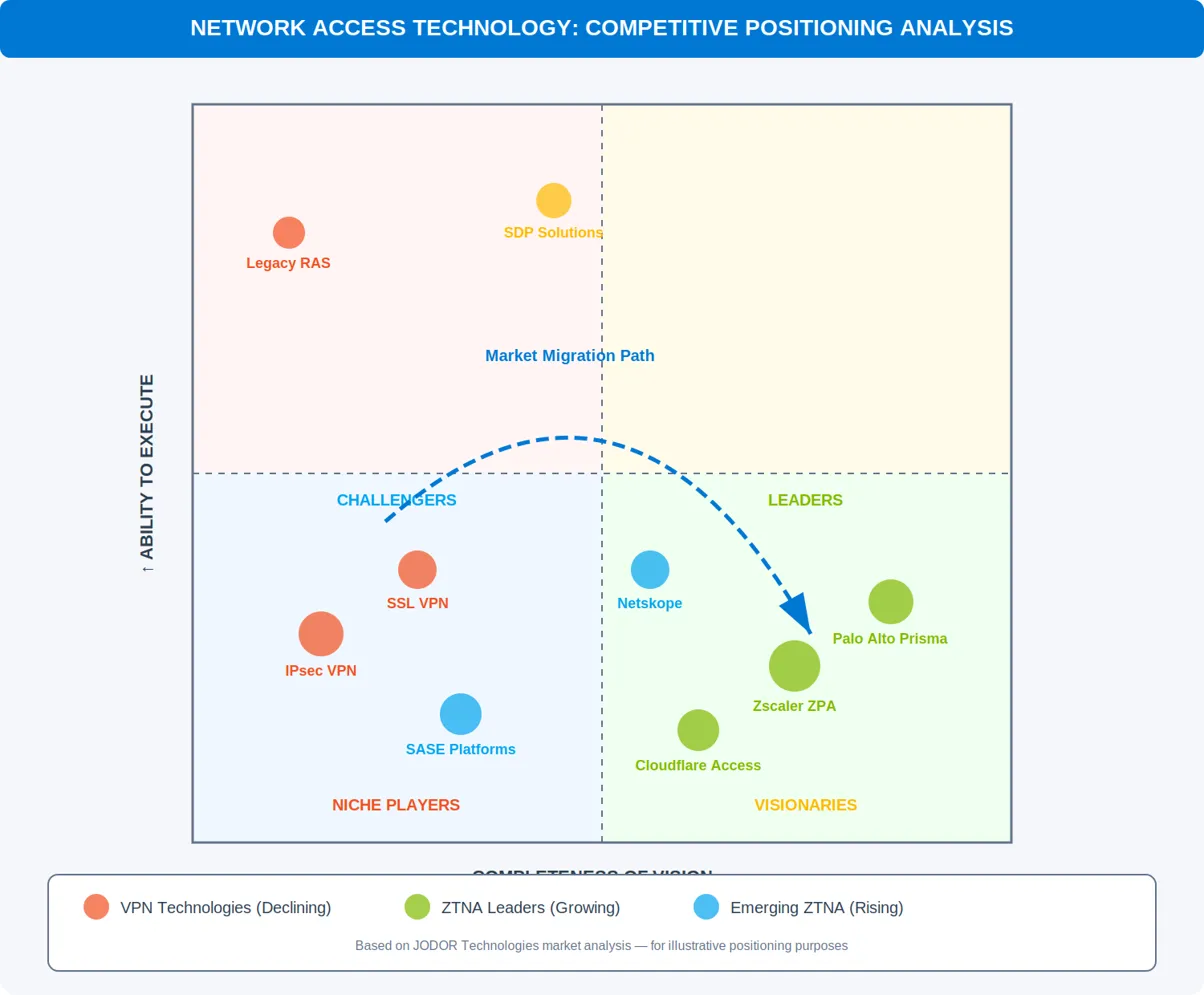
Preview from whitepaper — Competitive Positioning Analysis